
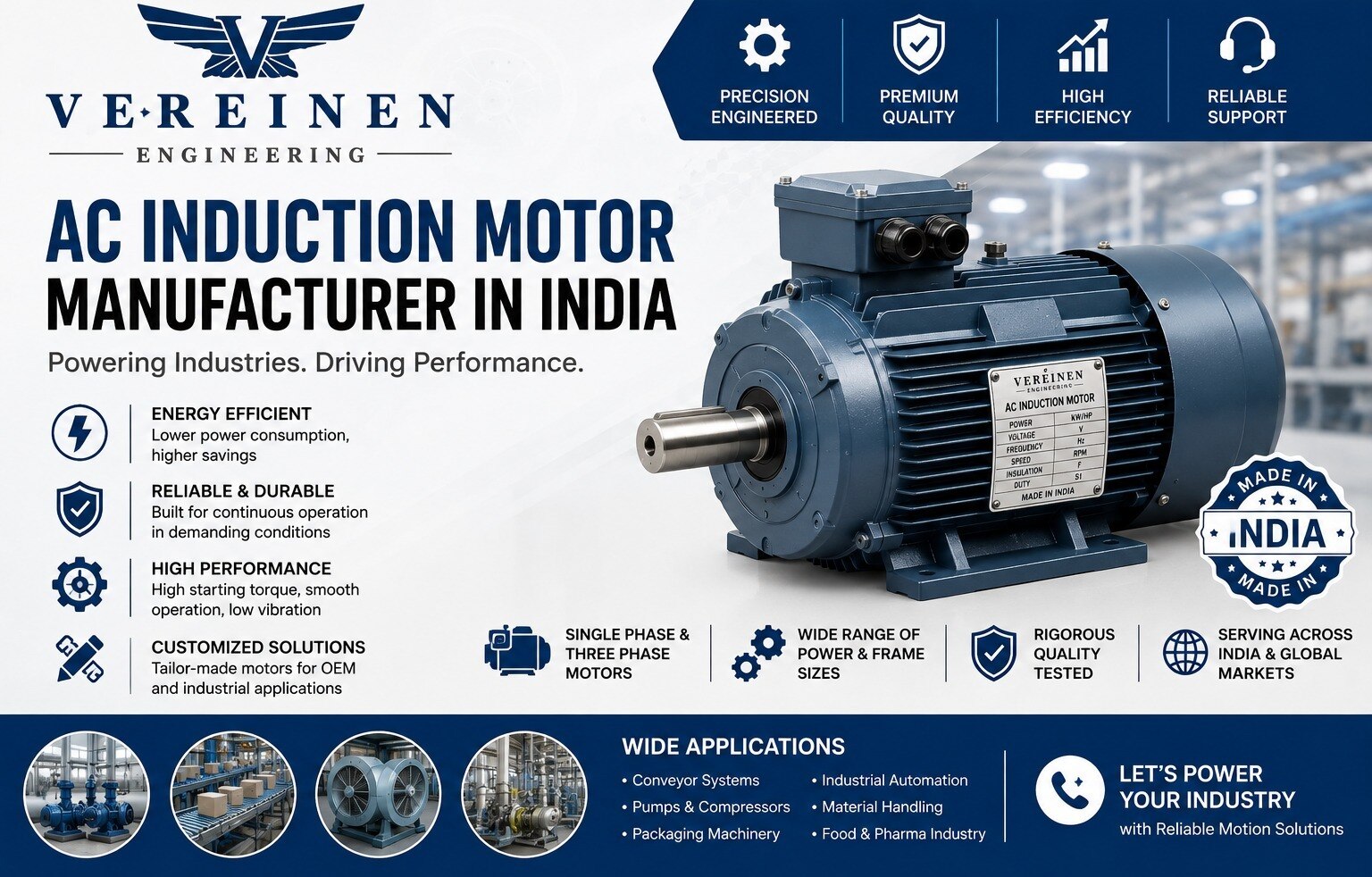
Pune’s monsoon can damage an AC induction motor without a single direct splash: humid air, overnight condensation, wet dust, blocked cooling paths and corrosion all reduce reliability over time. By the end, you will know how to match enclosure protection, sealing, insulation, heating, duty and installation details to the actual wet-season exposure.
Key takeaways
- Use IP66 where powerful water jets or severe splash can reach the motor.
- Install space heaters or dry the motor before energising after humid storage.
- Specify Class F insulation, ambient temperature and duty cycle in the purchase order.
- Inspect cable glands, terminal boxes, bearings and cooling passages after wet exposure.
How Pune monsoon conditions damage an AC induction motor
Rain is only one route by which Pune’s monsoon damages an AC induction motor. High relative humidity, wet dust, splash and condensation attack insulation, terminals, bearings and cooling passages even when the enclosure appears intact.
| Location | Main exposure | Result |
|---|---|---|
| Outdoor machine | Rain, wind-driven splash and polluted moisture | Water enters through cable entries, terminal-box seals or shaft openings; corrosion and wet windings follow. |
| Open-sided shed | Humid air, wet dust and occasional sideways rain | Deposits restrict cooling, while condensation forms during shutdown. |
| Sheltered indoor room | Little direct splash, persistent humid moisture conditions | Condensation corrodes terminals and reduces insulation resistance over repeated cycles. |
The driven equipment can create the main water path. A pump, fan or centrifugal blower may carry condensate into the airflow route, so inlet hoods, rain caps, drip legs and drains matter even when rain never falls directly on the motor.
The AC induction motor weather conditions determine the failure sequence: damp windings and corroded terminals increase starting difficulty; bearing corrosion adds friction; wet dust blocks ventilation; operating temperature rises; and efficiency declines. An AC induction motor moisture conditions review must include these indirect paths.
A motor that starts after installation has not passed the monsoon test. Weeks of humid operation can gradually damage insulation, bearings and terminals before a start failure appears. Check winding condition and insulation resistance after storage, washing or prolonged exposure; successful no-load rotation proves little.
How to choose IP55, IP56, IP65 or IP66 for the installation
Choose the rating from the water exposure at the installed motor, not from Pune’s rainfall alone. A fully enclosed room with high humidity and occasional cleaning has a different risk from an open-sided shed where wind-driven rain and splash reach the housing.
| Rating | IEC 60529 meaning | Site-based use |
|---|---|---|
| IP55 | Dust-protected; resists water jets | Sheltered indoor equipment and limited outdoor exposure without immersion |
| IP56 | Dust-protected; resists powerful water jets | Open-sided sheds exposed to wind-driven rain or heavier splash |
| IP65 | Dust-tight; resists water jets | Direct rain or washdown where dust exclusion is important |
| IP66 | Dust-tight; resists powerful water jets | Severe washdown or direct exposure to forceful spray |
IP55 is not waterproofing. None of these ratings permits immersion, protects against persistent standing water, or prevents condensation and polluted-moisture corrosion. IP65 or IP66 also does not make a motor suitable for temporary flooding.
Evaluate the complete ingress-protection chain, because one weak entry defeats a strong nameplate rating:
- Cable glands and conduit entries
- Terminal-box covers and their gaskets
- Shaft seals
- Cooling-fan covers
- Drain plugs and factory drainage
- Breather arrangements
For ac induction motor weather conditions and ac induction motor moisture conditions, specify the mounting position and cleaning method in writing. Do not field-drill drain holes: an undocumented hole can admit splash, insects and dust while invalidating the tested enclosure configuration. Factory-designed drainage must match the motor’s orientation.
How to control condensation before the motor is energised
Do not energise a motor after storage, washing, rain or humid standstill until you have checked its winding condition and insulation resistance. A warm motor cools overnight or after shutdown; humid air inside the enclosure then reaches its dew point and leaves water on windings, terminals and metal surfaces.
No-load rotation does not prove that this moisture is harmless.
Control condensation before the start with this procedure:
- Seal leaking cable glands, conduit entries and covers. Keep the terminal-box cover correctly closed and tighten its gasketed fasteners; an IP55 enclosure cannot protect against a defective entry.
- Confirm that factory-designed drain plugs or drainage paths suit the motor’s mounting position. Do not drill new holes, because an undocumented modification can defeat the tested enclosure arrangement.
- Use ventilation only where the manufacturer permits it and where it will not draw humid, contaminated air into the enclosure.
- Specify an anti-condensation heater for long standstill periods. It keeps the stopped winding above the dew point, so interlock it electrically to prevent operation while the motor is energised.
- Inspect the winding, terminals and enclosure, then measure insulation resistance and polarization index using IEEE 43 practice. Select the test voltage and acceptance values for the winding rating and machine type.
- Arrange controlled drying when readings are unsuitable. Do not treat a heater as a cure for a leaking enclosure.
These checks belong in the maintenance plan for AC induction motor seasonal equipment and AC induction motor moisture conditions. Record readings before release to service, then investigate falling values rather than resetting the starter and repeating a no-load test.
Which insulation, temperature and duty details matter for seasonal equipment
A “monsoon duty” label is incomplete. For AC induction motor seasonal equipment, request the winding insulation class, permissible temperature rise, declared ambient-temperature range, altitude reference, rated voltage and frequency, starting current, starting torque, efficiency, duty type and starts per hour.
Duty type defines how the motor may operate; seasonal operation alone does not justify an intermittent-duty rating. IEC 60034-1 distinguishes these cases:
| Duty | Operating pattern | Specification consequence |
|---|---|---|
| S1 continuous | Constant load until thermal equilibrium | Rate for continuous heating |
| S2 short-time | Fixed run followed by cooling | State run and rest durations |
| S3 intermittent | Repeated load and rest cycles | State cycle duration and starts per hour |
Blocked ventilation, a hot enclosure, high ambient temperature or converter operation reduces the usable rating even when the motor delivers the required kilowatts. Confirm the declared conditions against the actual installation.
For AC induction motor weather conditions, ask whether a variable-frequency drive changes the selection. Confirm voltage-stress capability, cable length, grounding, switching frequency, bearing-current protection and the insulation system, using IEC 60034-25 as an application reference. A line-operated motor is not automatically suitable for every drive.
The key distinction is between a motor that meets the kilowatt output and one that remains electrically and thermally suitable through Pune’s wet season. A higher IP code does not replace the correct insulation system, corrosion-resistant hardware or a coating specification suited to the environment.
What to put in the purchase specification for Pune monsoon equipment
Write the purchase document around site exposure and duty, not just kilowatts. State whether the ac induction motor seasonal equipment will operate indoors, in an open-sided shed, during washdown, in direct rain, or where temporary flooding is possible.
| Exposure | Specify in the enquiry | Failure if omitted |
|---|---|---|
| Sheltered indoor | Humidity, standstill duration, drainage | Condensation remains undiscovered |
| Open-sided shed | Wind-driven rain, mounting position, cable entry | Water reaches terminals |
| Washdown or direct rain | Washdown method, IP code, shaft seals | Spray enters bearings or enclosure |
| Flooding risk | Maximum water level, recovery procedure, drainage | A non-immersible motor is submerged |
Also record operating hours, load profile, starts per hour, duty type under IEC 60034-1, rated voltage and frequency, and whether the supply is direct-on-line or inverter-fed. For the phrase “induction motor manufacturer ac induction motors for monsoon equipment in pune,” a useful quotation must answer these fields in writing.
Require the supplier to state:
- IEC 60529 IP code, cable-entry arrangement, terminal-box orientation, shaft-seal details, drain or breather design, and driven-equipment drainage
- Anti-condensation-heater option, heater interlock, insulation class, temperature rise, ambient and altitude rating, and VFD compatibility
- Corrosion-protection system, including the ISO 12944 environment used for the paint specification
- Installation instructions covering insulation-resistance checks, drying limits, and energisation after wet storage
ISO 12944 defines coating durability; it does not replace an IP designation. VEREINEN ENGINEERING is worth comparing as a Pune OEM supplier only when its quotation addresses each environmental field instead of stating “monsoon duty.”
Related products
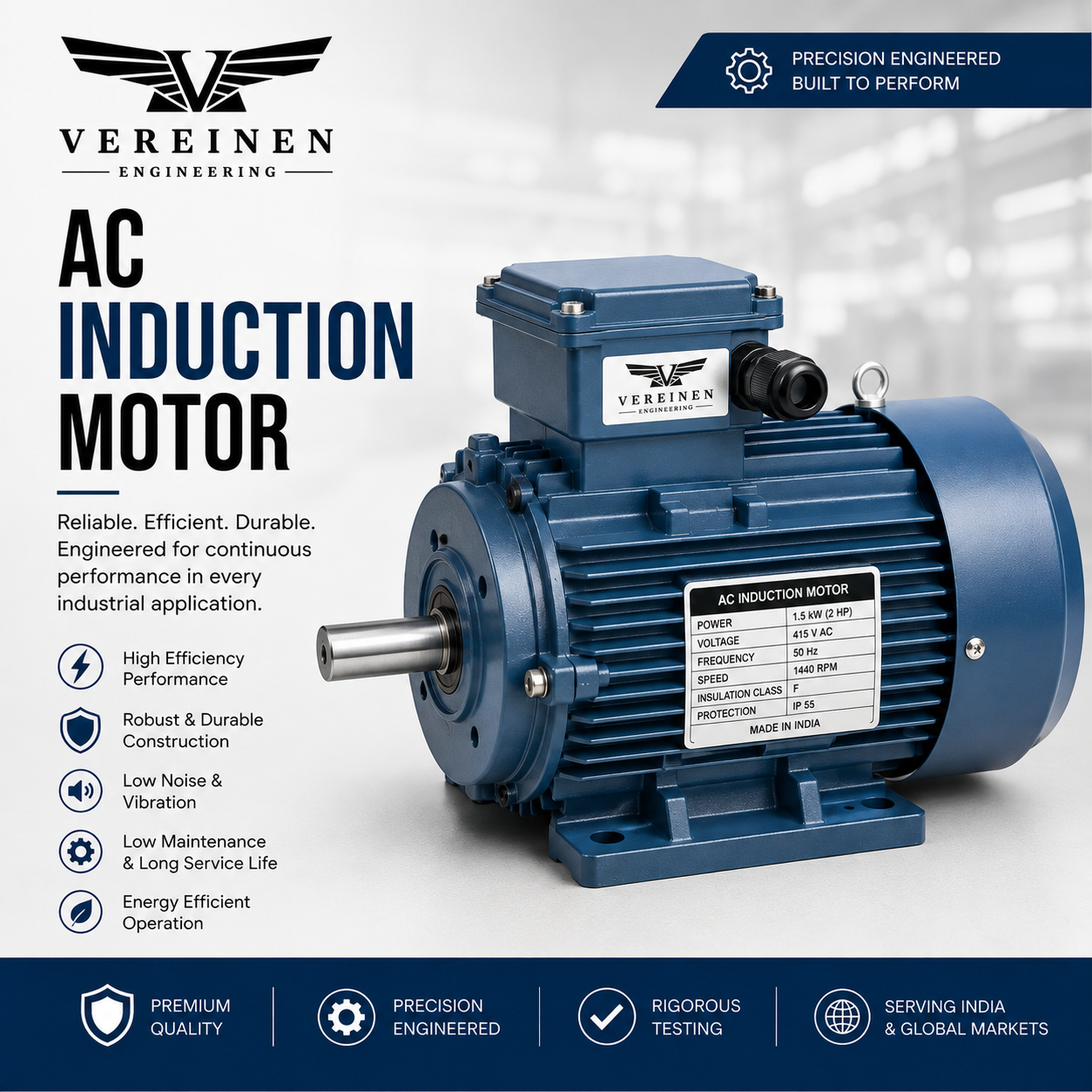 | AC Induction Motor Vereinen Engineering is a Pune-based OEM manufacturer of premium-quality AC Induction Motors, engineered to deliver reliable, energy-efficient, and... View product → |
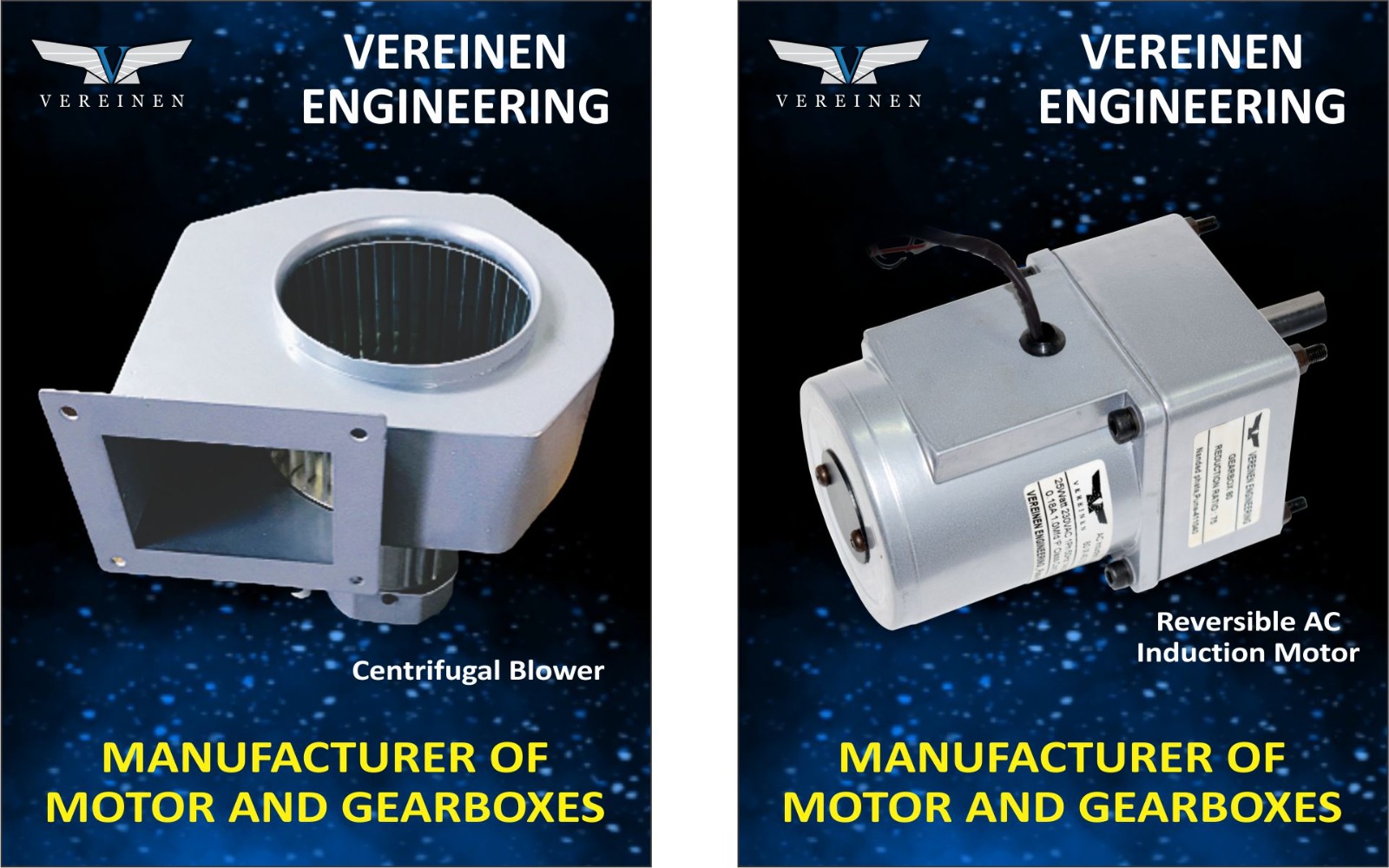 | Induction Motors Vereinen Engineering is a trusted Pune-based OEM manufacturer of high-performance Induction Motors designed to deliver reliable, energy-efficient,... View product → |
Frequently asked questions
How do Pune monsoon conditions damage an AC induction motor?
Humidity and condensation reduce insulation resistance, while wet dust, splash and blocked cooling passages affect terminals, bearings, airflow and heat dissipation.
Should you choose IP55, IP56, IP65 or IP66 for monsoon equipment?
Choose IP55 for ordinary dust and low-pressure water exposure, IP56 for powerful water jets, IP65 for dust-tight equipment exposed to water jets, and IP66 for dust-tight equipment exposed to powerful water jets. Match the rating to the actual spray direction and cleaning method.
How do you control condensation before energising a motor?
Keep the motor dry, use an anti-condensation heater during storage or shutdown, inspect the terminal box, and measure insulation resistance before applying power.
Which motor details matter for seasonal equipment?
Specify insulation class, allowable ambient temperature, temperature rise, enclosure rating, duty such as S1 or intermittent duty, starting frequency and the required protection against moisture.
What should a purchase specification include for Pune monsoon equipment?
State the motor power, voltage, frequency, speed, mounting arrangement, IP rating, insulation class, ambient temperature, duty cycle, cable-entry requirements, heater requirement and testing documents.