
A conveyor motor selected from nameplate kW alone can overheat when Pune’s motor-room temperature, enclosure heat, belt starting torque, and gearbox thermal limit are ignored. You will be able to check the installation, calculate the required output torque, and give a manufacturer the operating data needed for a safe summer selection.
Key takeaways
- Measure temperature at the installed motor, not outdoor ambient alone.
- Use 40°C and 1,000 m as IEC 60034-1 reference conditions.
- Calculate conveyor torque from load, speed, incline, and rolling resistance.
- Request derating, duty, VFD, IP, and insulation details in writing.
Why Pune summer changes conveyor motor heat
A Pune conveyor can run hotter than the weather report suggests. For AC gear motor summer operation in Pune, measure the maximum air temperature at the installed motor, not outdoor ambient alone. IEC 60034-1 commonly uses 40°C and 1,000 m altitude as reference conditions; above those values, request a manufacturer-confirmed rating adjustment.
- Direct sunlight raises the motor housing temperature, especially below a metal roof or beside a sun-heated wall. Shield the motor from radiant heat without blocking its cooling airflow.
- A hot roof, furnace, compressor, or neighbouring motor increases the air entering the motor. Recirculated air removes less heat than fresh room air.
- An undersized enclosure traps heat around the motor and gearbox. A sealed enclosure protects against dust and water but cannot reject heat unless its design includes adequate heat dissipation.
- Dust on a fan cover, cooling ribs, or enclosure filter restricts airflow. The motor then warms even when the room temperature remains within its nameplate rating.
These are AC gear motor heat conditions, not minor seasonal variations. Continuous conveyor duty creates heat soak: the housing, bearings, gearbox oil, and surrounding enclosure keep absorbing heat after the motor starts.
Low-speed VFD operation adds another risk because a shaft-mounted fan slows with the motor. Use the supplier’s derating data, independent forced ventilation, or an inverter-duty motor when low speed is continuous. A gearbox can meet the required torque yet exceed its thermal rating during hot, slow, repeated operation.
How to check motor and gearbox temperature during operation
Measure the air temperature at the motor’s air intake, in shade and away from the exhaust of another machine. Outdoor weather data is not enough: a roof, furnace, or closed enclosure can make the installation hotter.
IEC 60034-1 uses 40 °C ambient and 1,000 m altitude as common reference conditions, so record the actual site temperature against the nameplate and supplier rating.
Check the motor frame near the drive end and non-drive end, avoiding the fan cover and fin tips. Check the gearbox housing near the input bearing, output bearing, and oil sump area. Use a contact probe for repeatable readings; with an infrared thermometer, correct emissivity or place matt black tape on shiny metal.
- Record ambient, motor, and gearbox temperatures after the conveyor reaches its normal loaded steady state.
- Repeat the readings at the same locations during the hottest shift, then compare them with the manufacturer’s winding, housing, and gearbox oil limits.
- Inspect a blocked fan cover, dust-packed fins, undersized enclosure, and recirculated hot air before blaming the motor.
| Reading | Meaning | Action |
|---|---|---|
| Stable rise that levels off below the specified limit | Normal warming | Continue trending |
| Temperature still climbing after steady-state duty | Heat is not leaving the assembly | Investigate airflow, load, voltage, alignment, and lubrication |
| Gearbox housing hotter than its supplier limit, or rising oil temperature | Thermal rating is being exceeded despite adequate torque | Stop for inspection and obtain a revised thermal rating |
| One end suddenly hotter than the other, with noise or vibration | Bearing, coupling, or lubrication fault | Investigate promptly |
These checks reveal the ac gear motor heat conditions; surface temperature alone cannot confirm winding temperature. Use embedded RTDs or the drive’s thermal sensor when available.
How to size output torque for a loaded conveyor
Size the AC gear motor from belt force and speed, not motor kW alone. The required output torque is approximately total belt pull multiplied by the effective pulley radius; shaft power is belt pull multiplied by belt speed, divided by total drivetrain efficiency.
1. Calculate total belt pull. Add rolling resistance, belt and payload lift, skirt-seal friction, scraper drag, and the incline component: mass × 9.81 × sin(angle). For a declining conveyor, check whether gravity creates overhauling torque instead of motor-driven torque.
2. Convert conveyor speed into output speed: rpm = 60 × belt speed ÷ (π × pulley diameter). The gearbox ratio then relates motor speed to this output speed. A larger pulley increases output torque demand at the same belt pull.
3. Check running and starting conditions separately. Include breakaway torque, acceleration of the belt and material, incline torque, motor starting torque, acceleration time, and starts per hour. Apply the specified service factor to running torque, then compare both values with the gearbox’s permissible output torque.
4. Check power and heat. Divide force × belt speed by motor, gearbox, and coupling efficiency. Confirm the reducer’s thermal rating at Pune summer ambient, because mechanical torque capacity and continuous thermal capacity are separate limits.
For AC gear motor conveyor loads, select the next suitable size only after these checks. A service factor cannot correct an undersized gearbox, and a larger motor does not control an overhauling load without the required brake or regenerative drive.
How duty cycle, VFD operation, and protection details affect selection
A conveyor that runs continuously needs an S1 continuous-duty rating under the actual installation ambient, not only the motor’s 50 Hz kW. Frequent starts, stops, reversals, inching, or braking add thermal and mechanical stress; an S1 nameplate alone does not prove the motor can handle high-torque cycling under IEC 60034-1.
Specify these operating details before selecting the gearbox and motor:
- Continuous running time, starts per hour, stop frequency, reversing frequency, inching duration, and overload duration
- Required output speed range, pulley diameter, belt force, incline, and loaded starting torque
- VFD constant-torque or variable-torque profile, minimum speed, permissible overload, switching frequency, cable length, and braking method
- Supply voltage and frequency, motor mounting position, maximum installation ambient, altitude, and enclosure temperature
- Required IP rating, dust exposure, fan-cover cleaning access, and whether cooling air is recirculated
- Bearing-shaft voltage protection where the VFD and cable arrangement can produce bearing currents
Low-speed operation deserves special attention. A totally enclosed fan-cooled motor loses shaft-fan airflow as speed falls, so specify motor derating, an independent forced-ventilation fan, or inverter-duty construction. A blocked fan cover, dust layer, or undersized enclosure can push ac gear motor heat conditions beyond the rating even indoors.
For ac gear motor conveyor loads, give the complete duty profile to VEREINEN ENGINEERING rather than requesting a generic “summer-rated” unit. The selection then accounts for heat, torque peaks, brake energy, and protection together.
Related products
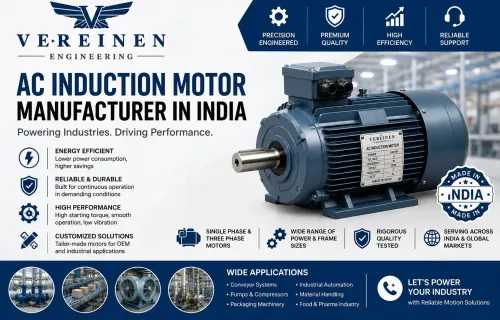
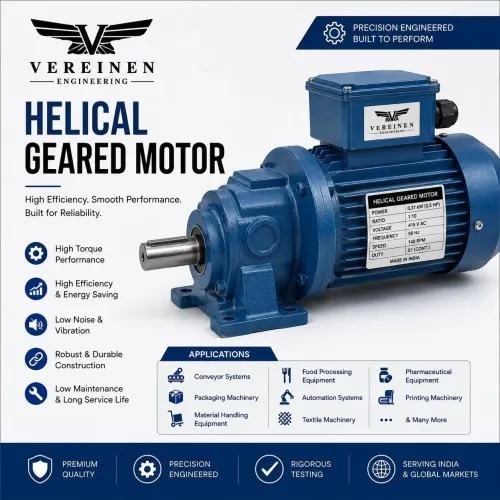
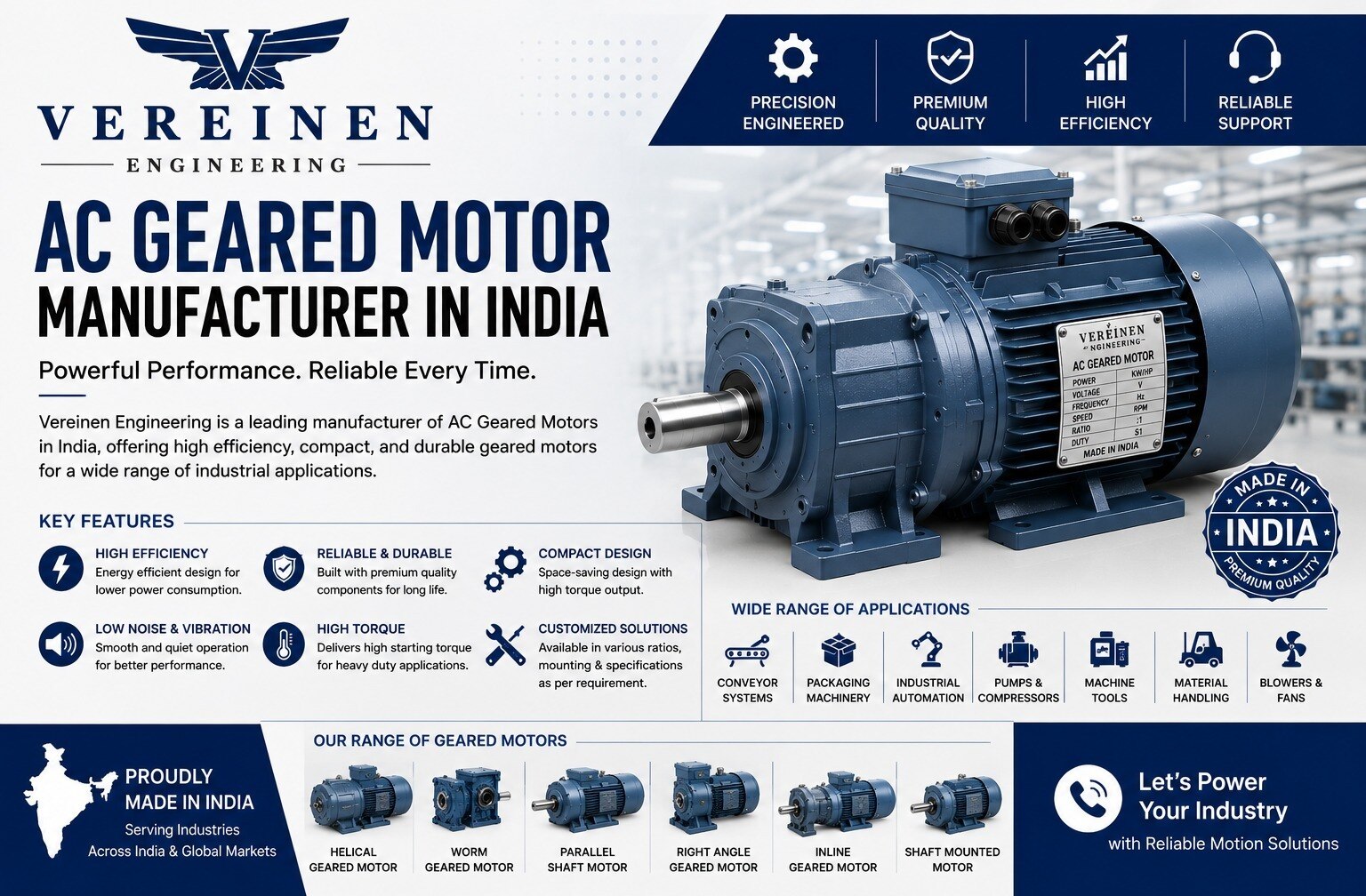
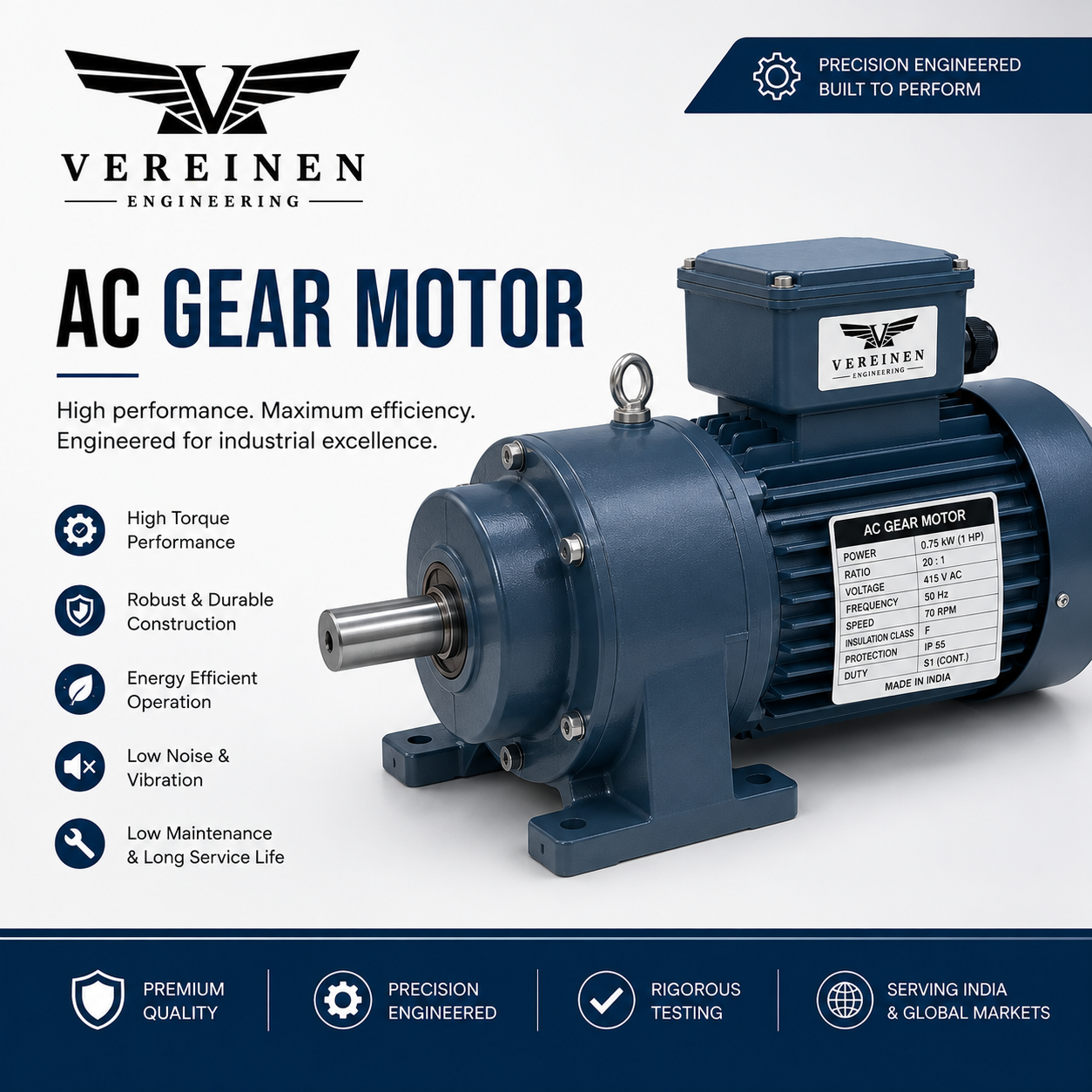 | AC Gear Motor Vereinen Engineering is a Pune-based OEM manufacturer of premium-quality AC Gear Motors, engineered to deliver efficient power transmission, high... View product → |
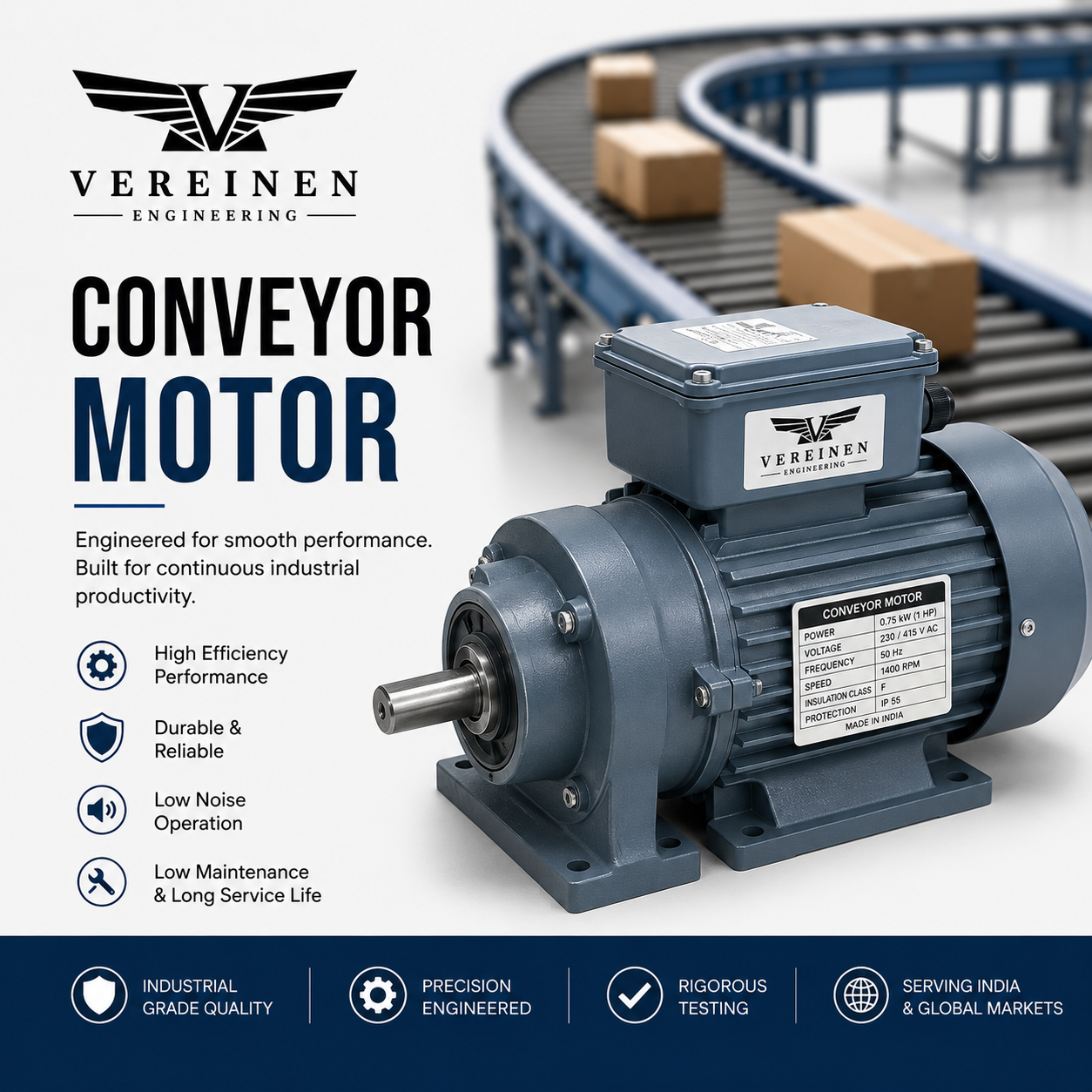 | Conveyor Motor Vereinen Engineering is a Pune-based OEM manufacturer of high-performance Conveyor Motors, designed to deliver reliable, energy-efficient, and... View product → |
What to request for a seasonal Pune motor selection
A geared motor manufacturer assessing AC gear motors for summer loads in Pune needs the maximum air temperature at the motor, not only the outdoor forecast. Record solar exposure, roof or furnace heat, enclosure temperature, airflow, altitude, mounting position, and nearby heat sources. “Summer-rated” has no technical meaning without these values.
Send one complete selection sheet:
- Maximum motor-location ambient temperature, altitude, direct-sun exposure, enclosure dimensions, ventilation, and required IP rating.
- Conveyor speed range, belt speed, pulley diameter, belt pull or product mass, incline angle, and the friction from skirts, scrapers, and loading.
- Continuous running hours, starts and stops per hour, reversing, braking, overloads, and required service factor.
- Supply voltage and frequency, VFD make and frequency range, lowest operating speed, and whether the motor has independent forced ventilation.
- Gearbox ratio, mounting orientation, brake torque and release behavior, and whether a declining conveyor can drive the load.
- Oil grade, ambient-temperature range, food-contact restrictions, and any lubricant compatibility requirement.
Use the operating evidence to separate the remedies:
| Option | Use it when | What to request |
|---|---|---|
| Derating | Heat or low-speed VFD operation limits cooling | Confirm reduced permissible load |
| Improved ventilation | Enclosure heat or slow shaft fan raises temperature | Forced-air kit and airflow requirement |
| Larger motor | Calculated torque or thermal margin is insufficient | Recalculate torque, current, and gearbox capacity |
| Different lubricant | Oil viscosity no longer suits the temperature or application | Approved oil grade and change interval |
For AC gear motor seasonal selection, compare measured winter and summer motor-location temperatures. During AC gear motor summer operation in Pune, also disclose an overhauling decline load: a larger motor alone cannot control regenerative torque, backdriving, or braking.
Frequently asked questions
Why can Pune summer conditions increase conveyor motor heat?
Heat at the installed motor can exceed the weather-report temperature because of enclosure heat, restricted airflow, nearby equipment, solar gain, and high conveyor loading. Measure the maximum air temperature around the motor during operation.
How do you check an AC gear motor’s temperature during operation?
Measure the air temperature beside the motor and the motor surface temperature after the conveyor reaches its normal load. Record readings at startup, steady running, peak load, and the hottest part of the shift. Compare the results with the manufacturer’s winding, insulation, and gearbox limits.
How do you size output torque for a loaded conveyor?
Calculate the force required to overcome conveyed load, belt or chain resistance, incline, acceleration, and friction. Convert that force to shaft torque, then check starting torque, service factor, output speed, and gearbox thermal capacity.
What details matter when selecting a motor for seasonal Pune operation?
Give the manufacturer the maximum installed air temperature, altitude, load, conveyor speed, starts per hour, duty cycle, VFD frequency range, braking needs, mounting position, IP requirement, and required output torque. Request written confirmation of derating and operating limits.