
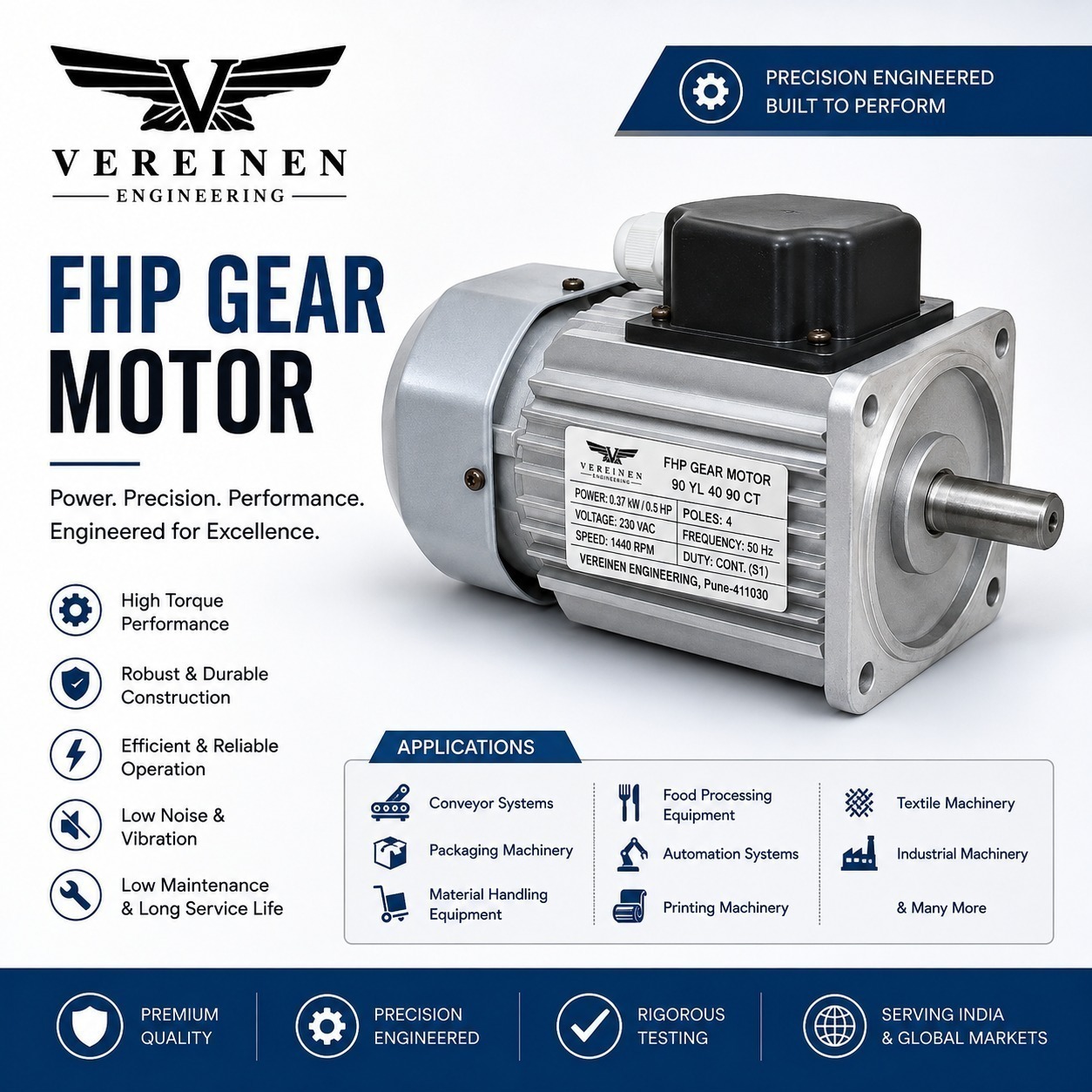
Fractional horsepower motors are used in many compact machines, but their smaller size does not make selection less important. In fact, space limitations and application-specific requirements can make FHP motor integration particularly sensitive to specification errors.
One common mistake when approaching an FHP Motor Manufacturer in Pune is providing only the wattage requirement. Power rating is important, but it does not describe how the machine operates. Two machines using motors of similar power can require different speeds, torque characteristics, mounting arrangements, and duty cycles.
Another frequent mistake is ignoring starting load. A motor may run a machine comfortably once it reaches operating speed but struggle to start when the driven mechanism is already loaded. Buyers should therefore communicate both normal operating conditions and startup conditions.
Other avoidable mistakes include:
Selecting RPM without considering final machine speed
Ignoring gearbox reduction requirements
Assuming all shafts with similar diameters are interchangeable
Failing to specify mounting orientation
Overlooking voltage and frequency requirements
Not discussing frequent start-stop operation
Ignoring ambient temperature and ventilation
Ordering from an old motor label without checking the current machine load
Mechanical dimensions deserve particular attention in compact equipment. A difference in shaft length, keyway, flange position, mounting-hole spacing, or body dimensions can make an otherwise suitable motor difficult to install.
For machine manufacturers in Pune and throughout Maharashtra, documentation can prevent many of these issues. A motor requirement sheet should ideally contain electrical specifications, mechanical dimensions, desired speed, load information, mounting details, operating duration, and any dimensional restrictions.
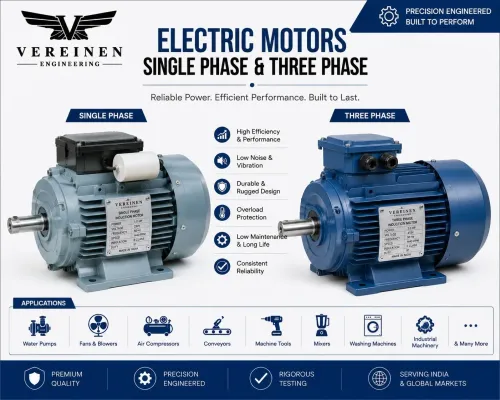
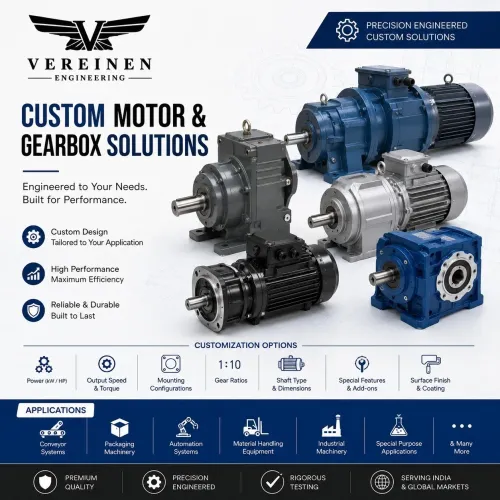
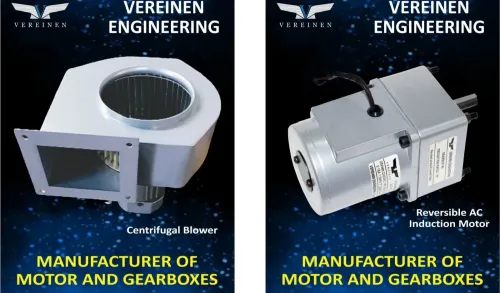
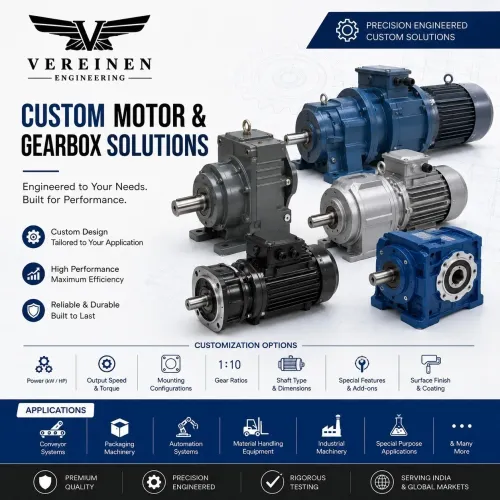
VEREINEN ENGINEERING manufactures FHP motors in Pune for industrial and OEM machinery, including application-specific requirements. When developing new equipment, early coordination between machine designers and the motor manufacturer can help reduce changes after prototypes have already been assembled.
OEMs should also consider future repeatability. If a motor is being developed for a machine that will enter regular production, specifications should be documented clearly enough for subsequent batches to maintain dimensional and operating consistency.
Small motors can have a significant effect on complete machine performance. Avoiding specification shortcuts at the procurement stage can reduce installation difficulties, overheating, inadequate torque, and redesign work later.