
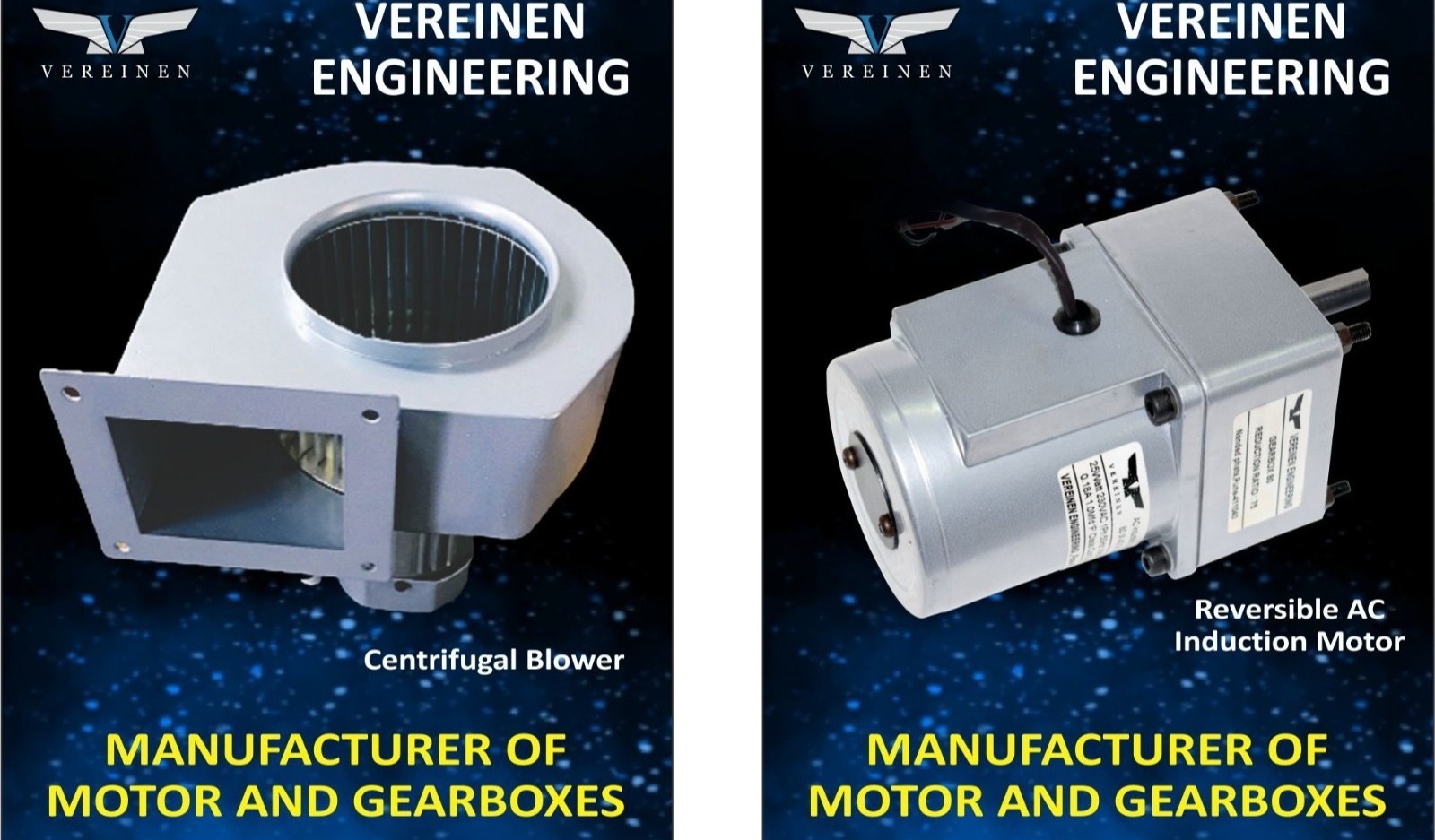
For an OEM, a motor is not simply a replacement component. It becomes part of the finished machine supplied to customers. Motor consistency can therefore affect assembly, machine performance, service requirements, spare-part planning, and ultimately the OEM's reputation.
Selecting an OEM Motor Manufacturer in Pune should begin with technical capability. Determine whether the manufacturer can understand application requirements rather than simply supply a motor matching a basic wattage and RPM description.
A practical supplier evaluation should examine several areas.
Application understanding: Can the manufacturer discuss load, torque, speed, duty cycle, gearing, and operating conditions?
Mechanical compatibility: Can shaft dimensions, mounting arrangements, flanges, and installation constraints be addressed accurately?
Electrical specifications: Are voltage, phase, frequency, direction, and other electrical requirements clearly defined?
Repeatability: For OEM production, can the approved configuration remain consistent across repeat orders?
Customisation: Can application-specific requirements be considered when catalogue configurations are unsuitable?
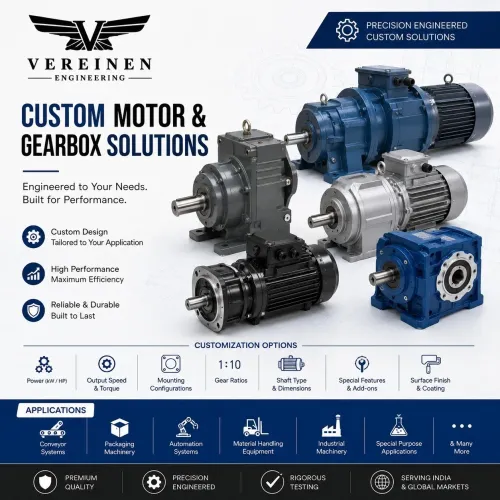
Gearbox integration: If speed reduction is required, can the motor and gearbox requirements be evaluated together?
Documentation also matters. OEM buyers should maintain an approved specification covering dimensions, electrical ratings, RPM, shaft details, mounting configuration, gearbox ratio where applicable, and other critical parameters. This reduces dependence on informal descriptions during repeat procurement.
Prototype evaluation is equally useful. Before committing a motor configuration to regular machine production, testing it under representative operating conditions can reveal issues related to starting, heating, vibration, noise, load response, and mechanical fit.
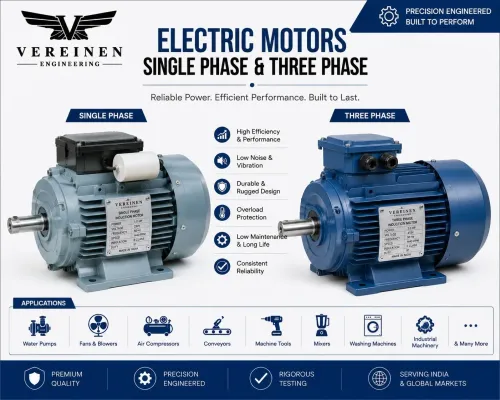
VEREINEN ENGINEERING serves OEM and industrial motor requirements from Pune, supporting motors and geared drive configurations for different machine applications. For Pune-based equipment manufacturers supplying customers across Maharashtra and other Indian markets, proximity to engineering and manufacturing networks can also simplify technical coordination during product development.
Price remains an important commercial factor, but unit cost alone provides an incomplete picture. A slightly lower-priced component can become expensive if it causes assembly modifications, inconsistent dimensions, premature service requirements, or repeated engineering intervention.
A suitable OEM motor supplier should therefore be evaluated as part of the machine-development process. Technical compatibility, repeatability, communication, customisation capability, and lifecycle considerations are stronger indicators of long-term value than purchase price alone.